India's Tech Revolution: DPI Stack Expansion, Semiconductor Hubs, and Clean Energy Milestones of 2026
From globalizing UPI to building mega-fabs in Gujarat and launching solar grids in Rajasthan, here is how India's technology ecosystem is rewriting the global playbook in 2026.
MoreFusion Editorial Team
Technical Research & Analysis Group
Last Updated: June 22, 2026
In this article:
- The expansion of India's Digital Public Infrastructure (DPI) in the Global South.
- Deep dive into the India Semiconductor Mission (ISM) 2.0 and local fabs.
- Analysis of clean energy infrastructure, focusing on solar and green hydrogen.
- How local creators and businesses can calculate taxes using modern tools.
- Key challenges and structural limitations facing India's tech ecosystem.
India's Tech Revolution: DPI Stack Expansion, Semiconductor Hubs, and Clean Energy Milestones of 2026
If you had walked into a board room in Silicon Valley ten years ago and said that a street vendor in Ahmedabad would be accepting micro-payments via a phone scan with zero transaction fees, while a massive semiconductor fab was being constructed down the road, you would have been laughed out of the room.
Yet, here we are in 2026.
India has transitioned from being a back-office outsourcing hub to a primary designer of global digital infrastructure. Driven by the expansion of the India Stack (DPI), the aggressive build-out of domestic semiconductor fabs, and record-breaking investments in clean energy, the country is charting a unique, high-performance technology path.
In this deep-dive report, we examine the three pillars driving India's technological surge in 2026 and analyze what it means for global development, local businesses, and everyday creators.
1. Pillar One: The Global Expansion of India's DPI (Digital Public Infrastructure)
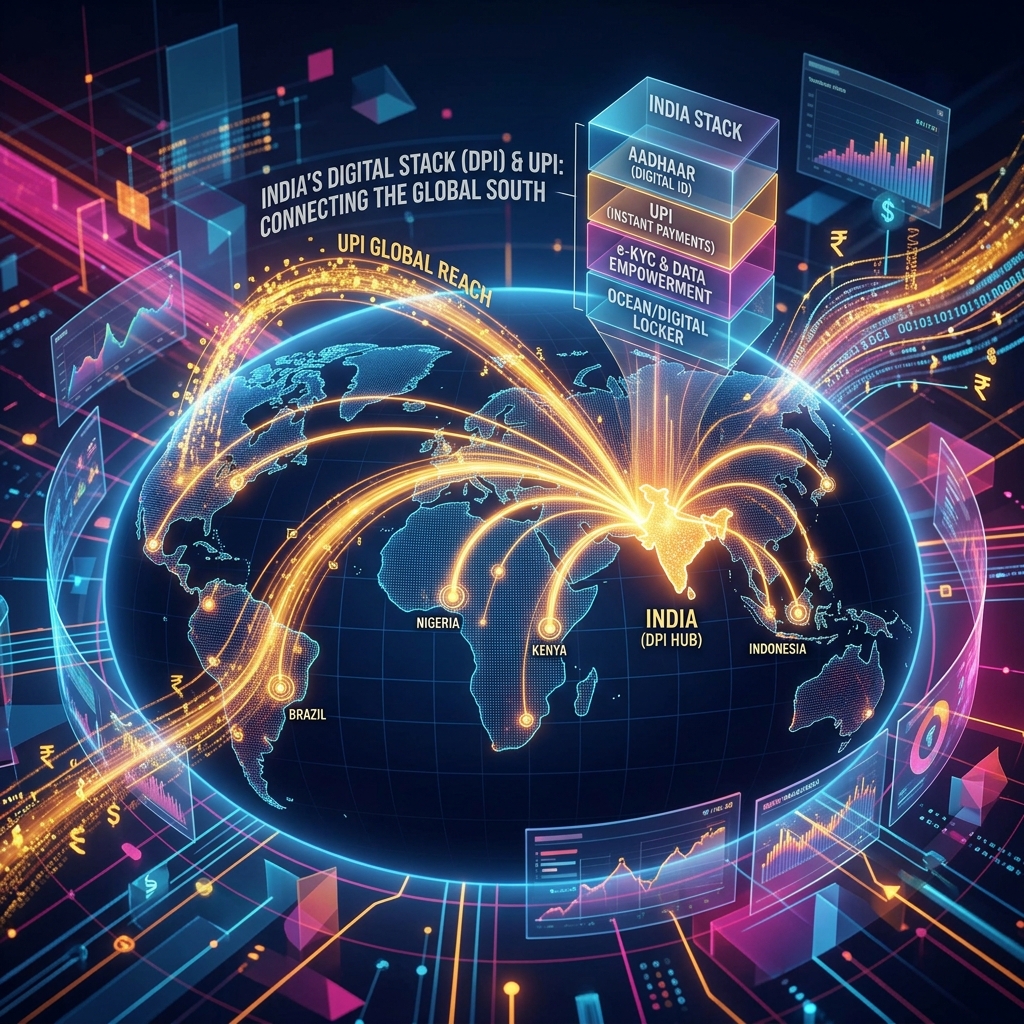
Digital Public Infrastructure (DPI) refers to the digital building blocks—like identity, payments, and data exchange—that allow a country to deliver services to its citizens. India's approach to DPI is unique because it is built on open APIs, encouraging private innovation rather than locking services behind proprietary corporate walls.
The Evolution of the India Stack in 2026:
- UPI (Unified Payments Interface) goes Global: In 2026, UPI is no longer just an Indian phenomenon. Thanks to international agreements, Indian tourists and businesses can scan QR codes to pay instantly in over 30 countries across Southeast Asia, Europe, and the Middle East. It has become a template for cross-border retail payments in the Global South.
- ONDC (Open Network for Digital Commerce): ONDC has expanded beyond food delivery into logistics, agriculture, and local manufacturing. By unbundling e-commerce, it allows small retail shops to list their products on a decentralized network, breaking the duopoly of massive global e-commerce platforms.
- Health Stack Integration: The Unified Health Interface (UHI) allows patient records, doctor consultations, and pharmacy orders to flow securely across public and private hospitals, making telemedicine accessible in tier-3 cities and rural villages.
Why DPI is Different:
Unlike traditional models where a single corporate giant controls the payment gateway or identity database, India's DPI layers are open-source. Anyone can build a custom application on top of the rails.
| DPI Layer | Core Infrastructure | Private Sector Examples | | :--- | :--- | :--- | | Identity | Aadhaar | Secure KYC verification for banks, telcos | | Payments | UPI (NPCI rails) | PhonePe, Google Pay, BHIM, Paytm | | Data Exchange | Account Aggregator | Instant collateral-free loan approvals | | Commerce | ONDC | Local delivery apps, logistics aggregators |
2. Pillar Two: Semiconductor Sovereignty and the Fabs of Gujarat
For decades, the global technology supply chain had a single point of failure: extreme concentration. Over 90% of advanced logic chips were manufactured in Taiwan.
To mitigate this risk, the Indian government launched the India Semiconductor Mission (ISM) 2.0 with a massive financial layout. By 2026, these policies have materialized into physical infrastructure.
The Fab Hubs:
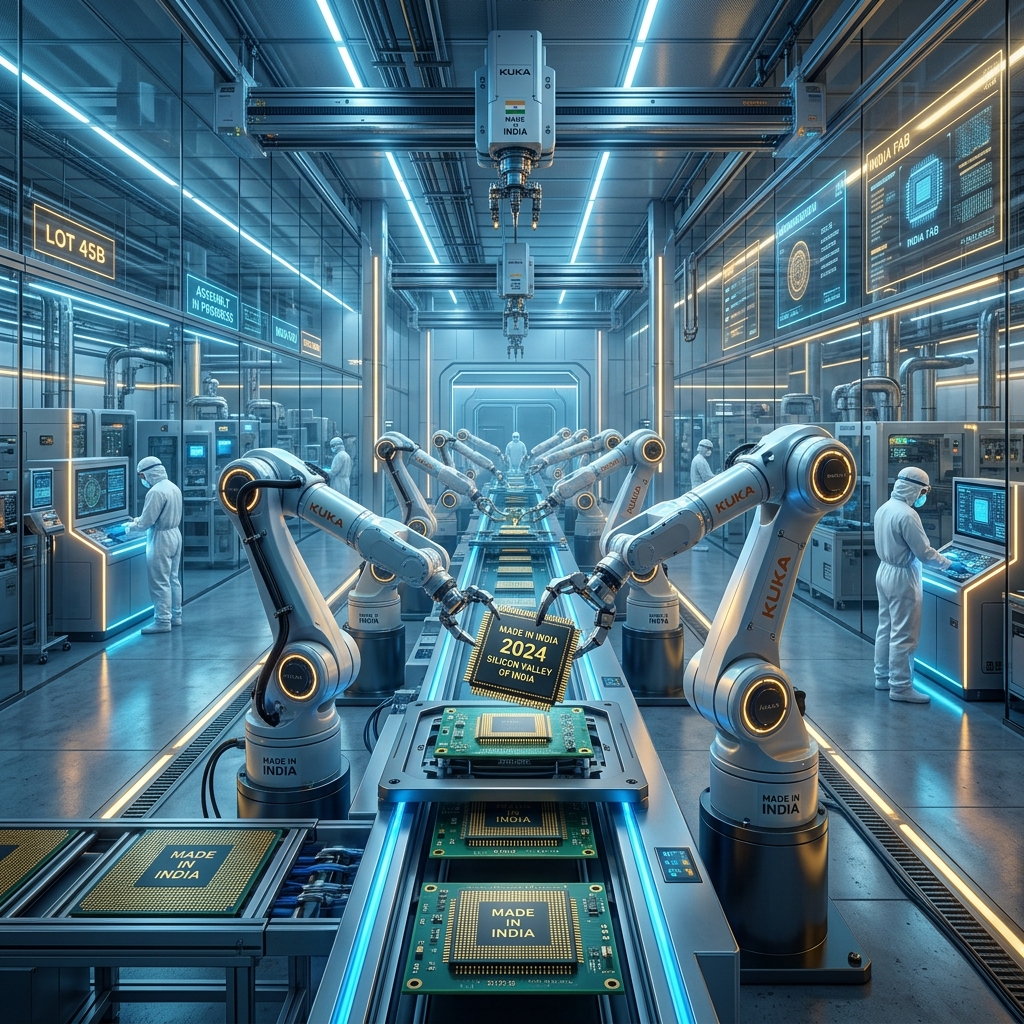
- Dholera, Gujarat: Dholera has emerged as the epicentre of India's semiconductor manufacturing. Large joint ventures (such as Tata Electronics partnering with PSMC) are setting up fabs capable of producing 28nm and 40nm legacy nodes. These chips are essential for automotive electronics, power systems, and IoT devices.
- Sanand, Gujarat: Sanand has become a hub for ATMP (Assembly, Testing, Marking, and Packaging). Packaging is where multiple silicon dies are combined into a single finished product. Setting up local ATMP units allows India to process silicon wafers imported from overseas, creating a complete local supply chain.
- Sahasralinga Semiconductor Park (Karnataka): Focuses on compound semiconductors (Gallium Nitride and Silicon Carbide), which are critical for high-efficiency electric vehicles (EVs) and smart grids.
Why this matters: Building a semiconductor hub is not just about building factories; it is about building ecosystems. A single fab requires a constant supply of ultra-pure water, specialized gases, stable electrical grids, and highly trained micro-engineers. The Dholera and Sanand projects are transforming local engineering universities, driving high-paying jobs, and encouraging local industrial manufacturing.
3. Pillar Three: Powering the Grid with Green Energy
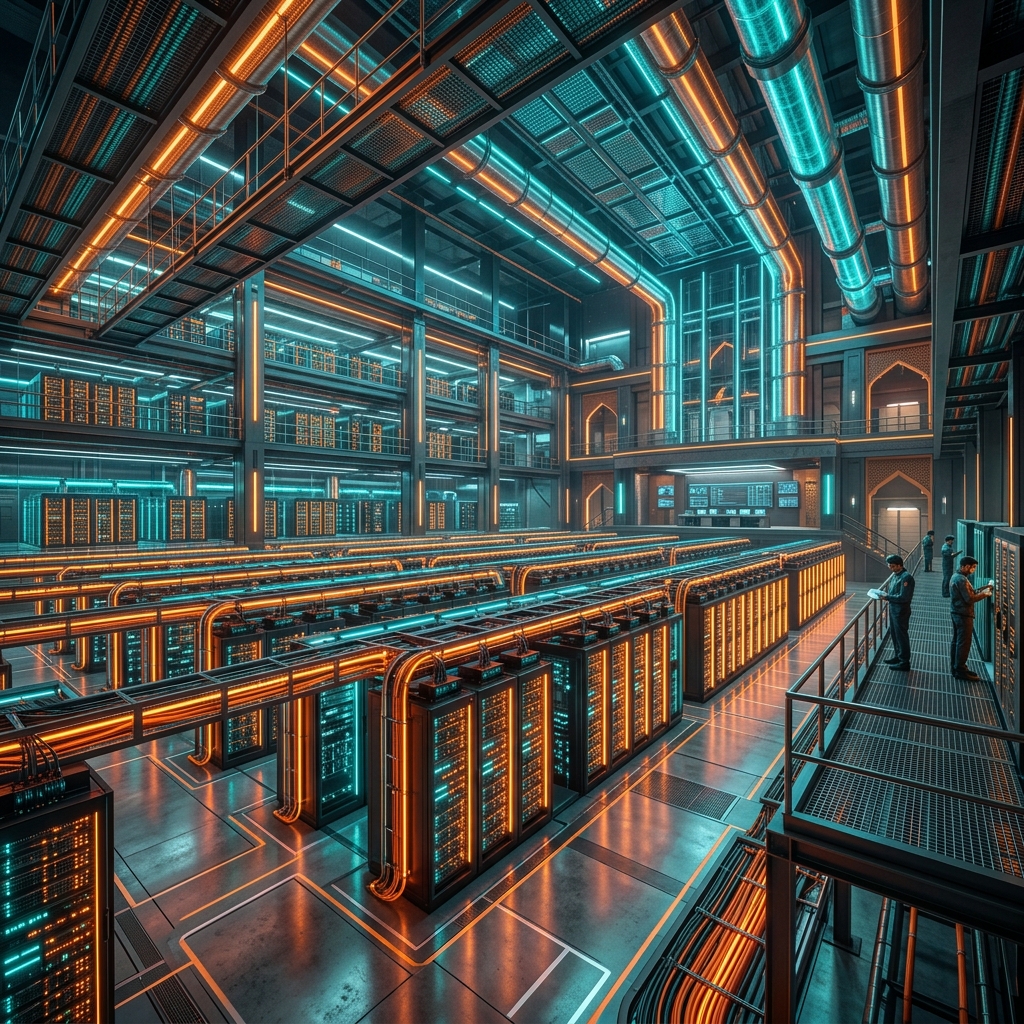
Running data centers and chip fabs requires massive amounts of power. If India powered this digital revolution entirely with coal, it would trigger environmental challenges.
Consequently, India has combined its digital push with an aggressive renewable energy expansion, aiming to generate 500 GW of non-fossil fuel capacity by 2030.
Major Clean Energy Achievements in 2026:
- Mega Solar Parks: The Bhadla Solar Park in Rajasthan has expanded further, retaining its title as one of the largest solar installations in the world. Combined with new wind-solar hybrid projects in Gujarat, India is generating solar power at record-low costs.
- National Green Hydrogen Mission: India has established green hydrogen hubs along its coastline (including Gujarat, Andhra Pradesh, and Tamil Nadu). Green hydrogen uses renewable energy to split water into hydrogen and oxygen, providing clean fuel for heavy industries like steel, chemicals, and shipping.
- Battery Energy Storage Systems (BESS): To resolve the issue of solar power generation stopping at night, India has deployed massive grid-scale lithium-ion and sodium-ion battery storage units across the national grid, ensuring a stable, round-the-clock power supply.
4. Local Business Operations: Managing Finances in the Digital Age
With the rise of local manufacturing and decentralized commerce, thousands of micro-entrepreneurs and creators are launching new ventures in India. However, navigating the tax framework can be complicated.
As transactions move online via UPI and ONDC, calculating the Goods and Services Tax (GST) is a daily operational task.
To help local businesses manage their finances without expensive accounting packages, MoreFusion provides a free, client-side GST/Tax Calculator.
Whether you are a freelancer billing international clients or a local merchant supplying electronics, you can calculate tax-inclusive or tax-exclusive amounts instantly, keeping your pricing transparent and compliant.
Additionally, if you are looking to scale your business or secure equipment, you can utilize our EMI & Loan Calculator to plan your business expenses and calculate monthly installments before approaching financial institutions.
5. Misconceptions About India's Tech Boom
When reading global news reports, it is easy to get caught up in the hype. Let's clear up a few common misconceptions about India's technology transition:
Misconception 1: "India is immediately building 3nm AI chips."
- The Reality: The fabs currently being built in Dholera focus on 28nm to 40nm nodes. While these are not the bleeding-edge chips used in iPhones or AI supercomputers, they are the workhorses of the global economy, powering cars, industrial machines, medical equipment, and consumer appliances. Securing legacy node production is a critical step before attempting advanced nodes.
Misconception 2: "Digital Public Infrastructure solves all inequality."
- The Reality: While UPI and Aadhaar have simplified payments and bank access, digital exclusion still exists. Offline alternatives, simpler voice-based interfaces (using local languages), and physical infrastructure (like roads and electricity) remain critical to bridging the digital divide.
6. Frequently Asked Questions
Q: Why did India focus on semiconductors rather than continuing to grow its software services?
A: Software services are highly profitable, but they leave the country dependent on foreign hardware. By building physical chip fabs, India protects its local electronics manufacturing sector from global geopolitical trade wars and supply chain blockades.
Q: How can small merchants join ONDC?
A: Small merchants do not need to register on a single platform. They can join through various provider apps (like Mystore or Paytm) which list their inventory on the open registry, making them discoverable to any buyer app.
Q: Is India's grid ready for electric vehicles?
A: EV charging spikes local grids. That is why India is integrating grid-scale battery systems and smart charging management software to balance load distribution during peak hours.
7. The Road Ahead: Expert Predictions for 2027 and Beyond
As we look toward the end of the decade, several key transformations are set to redefine the Indian tech landscape:
- DPI-Based Credit Systems: The Account Aggregator framework will automate small business lending. Micro-merchants will secure instant, collateral-free credit based on their verified UPI sales history, completely bypassing traditional paperwork.
- Sovereign AI Infrastructure: India will deploy government-backed AI compute clusters, allowing local startups and research institutes to train large models in regional Indian languages at subsidized rates.
- Local EV Supply Chain Integration: With local semiconductor packaging and battery gigafactories coming online, the price of electric two-wheelers and three-wheelers will drop significantly, achieving price parity with petrol alternatives without relying on imports.
Conclusion: Designing the Future
India's technology journey is no longer about replicating Western models. By building open-access digital public infrastructure, investing in domestic hardware fabrication, and powering the entire system with clean energy grids, India is creating a new blueprint for digital growth.
For businesses and developers, this means the landscape is shifting from pure software creation to complex hardware integration, clean operations, and digital compliance.
To stay ahead of these regulatory and financial shifts, explore our client-side calculators like the GST Calculator and the EMI Calculator to manage your operations securely and efficiently. The future is digital, clean, and local.